




Whist – Play Online for Free
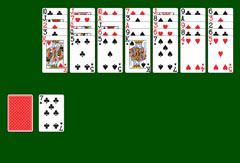
Whist comes from England and grew in the 17th century out of older trump games such as ruff and honors; under the name whisk it is first mentioned in 1621. Charles Cotton wrote in 1674 that it was called whist because of the silence the players had to keep, but whether the name really comes from that is disputed. In 1742 Edmond Hoyle published his treatise on whist, which remained the standard for about a hundred years, and "according to Hoyle" still means "by the rules" in English today. In Britain the game lives on at whist drives, local social tournaments. The version here is short whist to five points, whose laws two London clubs set down in 1864. Phileas Fogg plays whist at the Reform Club in Jules Verne's "Around the World in Eighty Days", and Edgar Allan Poe opens "The Murders in the Rue Morgue" by weighing whist against chess. Try it at no charge and without an account, sitting opposite a computer partner and facing two computer opponents.
Six tricks for nothing, every one after that counts: Whist rules and tips
Two fixed partnerships sit at the table, and your partner sits across from you. The game uses 52 cards, dealt one at a time until everyone has thirteen. The very last card belongs to the dealer and is turned face up, and its suit is trumps for that deal. It stays face up until the dealer's first turn, when it goes into the dealer's hand.
- Who leads, who follows: Play begins with a lead from the dealer's left-hand neighbor. If you hold the suit that was led, you must follow it. If you don't, you are free to trump or to get rid of any card at all. A trick goes to the highest trump in it or, if none was played, to the best card in the suit led, the ace being the top card.
- Counting tricks: A partnership's first six tricks score nothing. Each trick after that is worth one point, so a side that takes nine tricks scores three.
- Honors: The ace, king, queen and jack of trumps are the honors. A partnership that holds all four scores 4 points, three of them 2, no matter who takes the tricks. A side that already stands at four points before the deal scores no honors, and if a side wins the game through tricks, that deal's honors no longer count.
- The game: The first side to reach 5 points wins the game. If the opponents still have nothing, it is a treble worth 3 rubber points; with 1 or 2 points it is a double, and with 3 or 4 a single. Surplus points are lost, and the next game starts from zero.
- The rubber: The first side to win two games takes the rubber. It adds 2 rubber points to the values of its games, and if the other side also won a game, that game's value is subtracted.
The scoreboards keep you posted on trumps, tricks and games won. The level you pick applies only to the two computer opponents, while your partner always plays on Normal. On Easy the opponents throw almost every other card without thinking; on Hard they play out the end of every deal in their heads and deliberately cover a picture card that is led with a higher one.
Time-tested rules from the whist table:
- Second hand low, third hand high: Playing second to a trick, you usually play a low card, because your partner still comes after you. Playing third, you go high so that the opponent cannot win cheaply.
- Open with your long suit: Lead your longest suit. Once its high cards have fallen, the small ones become tricks.
- Plenty of trumps, lead trumps early: With five or more trumps, draw the opponents' trumps before they can ruff your aces and kings.
- Don't trump your partner's trick: If the trick already belongs to your partner, throw away a worthless card rather than waste a trump.
- Remember the turned-up card: You know the dealer holds that trump. It tells you where an important card is.
From the classic to its heirs: five games with tricks and partners
In the mood for more tricks? These games go well with it:
- Bridge: The most famous descendant. Trumps are not turned up but negotiated in an auction, and one hand is spread open on the table as the dummy.
- Spades: Another heir from the same family. Spades are always trumps there, and everyone estimates before play how many tricks they will manage.
- Hearts: The same deck and the same duty to follow suit, but without trumps and without partners. Each heart you collect counts against you, and so does the queen of spades.
- Doppelkopf: Two against two again, but only the queens of clubs reveal who belongs together, and Re and Kontra let you raise the value of the game.
- Scopa: Fixed partners across the table, just as in whist, except that you don't take tricks but capture table cards whose value matches the card you play.