




Durak – Play Online for Free
Durak is the Russian word for fool, and that is exactly what the loser gets called at the end. There is no winner in the usual sense: whoever has run out of cards once the stock is used up is off the hook, and whoever is still holding cards at the very end is the durak. In between, players attack and defend, with a trump suit that every game decides anew. Here you share the table with three computer opponents.
The game has been documented since the late 18th century: a well-known Russian handbook for card players from the 1790s already mentions a game called Durachki, the little fools. For a long time it counted as a pastime of peasants and ordinary folk, while polite society preferred Preference. In the 20th century Durak won fans across every class of Soviet society and overtook Preference in popularity. Today it is regarded as Russia's best-known card game and is played all over Eastern Europe.
The version you play here is known in Russian as Podkidnoy, roughly "throw-in", because every attacker may add matching cards. There is also Perevodnoy, in which the defender can pass an attack on to the next player with a card of the same rank. If the durak is stuck with a Six at the end, some groups slap it onto his shoulder in mockery: a fool with epaulettes.
Attack, Defend, Pick Up: How Durak Is Played
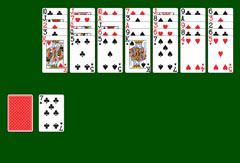
The game uses 36 cards from the Six up to the Ace, and each of the four players receives six. The bottom card of the stock lies face up, crosswise beneath it. It sets the trump suit and is the very last card to be drawn, after which a suit symbol in its place keeps reminding you of the trump.
- Who starts: The first attack is made by whoever holds the lowest trump, decided afresh in every game. The defender is always the next player clockwise.
- Attacking: You may choose the first card freely, and you may even lead two or three equal-ranked cards together. Every further attacking card needs a rank that is already on the table, whether as an attacking or a defending card. With End Attack, it is the defender's turn.
- Beating: Every attacking card must be covered by a higher card in its own suit or by a trump. A trump can only be beaten by a higher trump. The defender picks the order: tap a card on the table first and then one from your hand, and you cover exactly that card.
- Joining in: Anyone except the defender may add cards, first the lead attacker, then the others in turn. Once all cards are covered, the round of asking starts again, and even players who passed earlier may add more.
- Upper limit: Until the first successful defense of a game, no more than five attacking cards may lie on the table, after that six, and never more than the defender held when the attack began.
- Picking up: If you cannot or will not beat any more cards, press Pick Up. The attackers may then still throw in matching cards before the whole table goes into the defender's hand. The next attack comes from the player after the defender.
- Defended: When everything is covered and nobody adds anything, the cards go to the discard pile, and the defender attacks next.
- Drawing and going out: After each attack, everyone refills to six cards from the stock, the attacker first and the defender last, and the defender only after a successful defense. Once the stock is empty, anyone left without cards is out. If the last players finish at the same moment, nobody loses and the game is drawn.
No points are counted, and every game stands on its own. On Easy the opponents attack with a single card and never throw anything in, while on Hard the attacker adds cards whenever possible.
How to make sure someone else ends up as the fool:
- Save your trumps: Cover a low card with a higher one of the same suit whenever you can. Once the stock is empty, trumps decide almost everything, and whoever has none left piles up cards fast.
- Attack with small fry: Open with your lowest cards that are not trumps. As long as the stock still hands out cards, you trade weak cards for new ones that way.
- Collect cards of one rank: Two or three cards of the same rank are worth their weight in gold in an attack, because you can lead them together or throw them in later.
- Do not hand out new ranks: Every card you defend with gives the attackers a rank they may add to. If you can cover with a card whose rank is already on the table, you open up nothing new for them.
- Pick up without fuss early on: At the start it can be cheaper to take a few low cards than to give away valuable trumps. Toward the end, when no more cards are coming, every card you pick up becomes a burden.
- Keep count: With just 36 cards it pays to remember which trumps and Aces are already gone. And whoever draws last from the stock gets the face-up trump card, so that one is known to everybody.
Just Don't Be Last: Five More Games Against the Computer
A fixed trump, a title for the loser or a slice of Russian card tradition: each of these games has something in common with the fool's game.
- Black Peter: Here, too, there is no winner, only a loser. Whoever holds the one card without a match at the end comes off worst, and until then you take turns drawing blind from a neighbor.
- President: Whoever is left over last gets branded Scum and, on top of that, has to hand over their best cards in the next round.
- Spades: In Durak the turned-up card decides the trump, but here it is fixed from the start: it is always spades. Four players form two teams and bid their tricks before each round.
- Mau-Mau: The low numbers are missing there as well, since the deck only starts at the Seven and holds 32 cards. What counts there, though, is who gets rid of their cards first, not who is stuck with them last.
- Chess: No cards, but a game the Soviet Union dominated for decades. From 1948 until Bobby Fischer took the title in 1972, every world champion came from there. Here you challenge the computer.